“From the Ground Up” Toolkit
Creating Ethical Spaces of Engagement
“Food will be what brings the people together."
Secwepemc Elder, Jones Ignace.
Overview of the Toolkit

Play the following video to learn about the From the Ground Up Toolkit

Bundles at a Glance:
Explore the five interconnected bundles, each offering
unique insights and tools to support Indigenous food sovereignty.
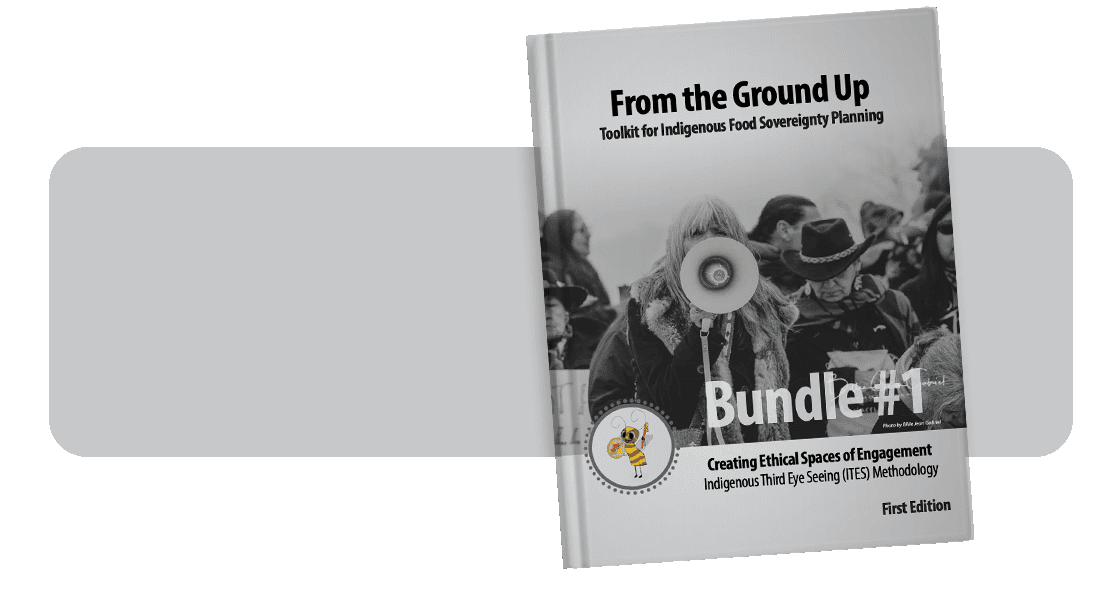
BUNDLE #1:
Creating Ethical Spaces of Engagement: Indigenous Third Eye Seeing (ITES)
This Bundle provides an overview of the structure, tools and terminology offered by the ITES Methodology developed by the author. This bundle also provides an overview of the values, wise practices, and methods to guide the facilitation of ethical spaces of engagement in land and food system discourse.
- Ethical, culturally safe engagement
- Intra-active and relational facilitation
- Trauma-informed methodologies
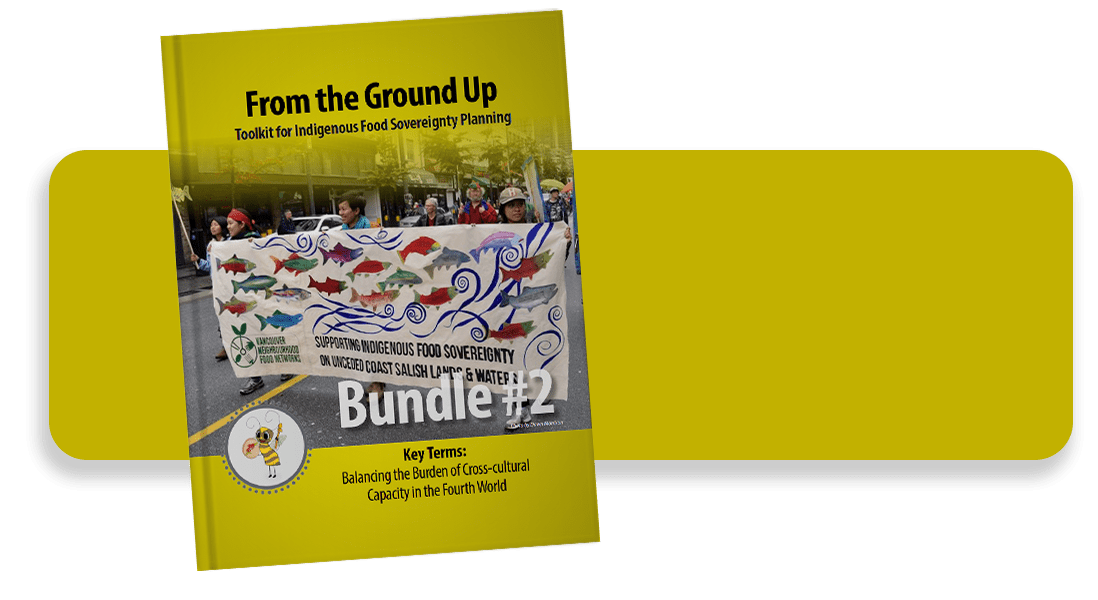
BUNDLE #2:
Balancing the Burden of Cross-cultural Capacity in the Fourth World
This bundle offers a glossary of key terms that highlight relevant social, political, technical and transcultural interpretations of Indigenous food sovereignty and food systems thinking. It offers tools, terminology to balance the burden of capacity carried by Indigenous Peoples who work under duress within white supremacist structures and processes that serve to erase, reduce and dispossess Indigenous hunting, fishing and gathering cultures and economies.
- Understanding Indigenous food sovereignty
- Recognizing systemic oppression
- Using tools and terminology responsibly
BUNDLE #3:
Transcending Wicked Coyote Problems - Charting a Transformative Pathway
This bundle highlights some key wicked systemic problems and offers an opportunity to apply Indigenous Third Eye Seeing (ITES) Methodology to the process of transcending the underlying contradictions. Facilitators will gain experience and confidence to lead critical spaces of engagement that explores potential to uphold Indigenous subsistence values and visions.
- Addressing complex systemic problems
- Applying ITES methodology
- Facilitating critical engagement

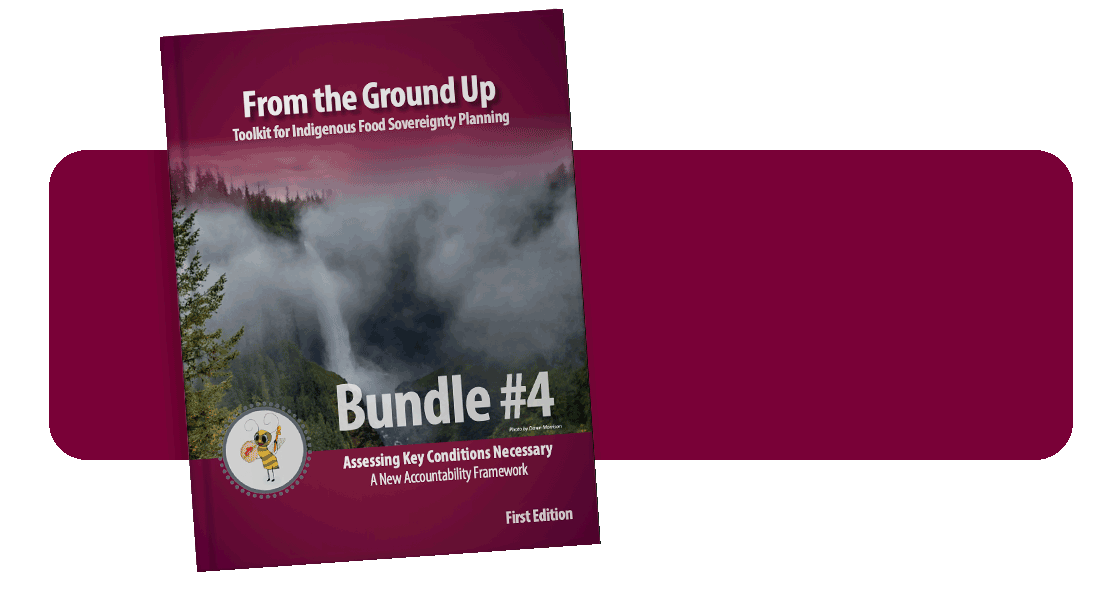
BUNDLE #4:
New Accountability framework - Assessing Relational Indicators of Indigenous Food Sovereignty
The assessment tool is a technical exercise intended to scale deep, scale out, and scale up capacity to develop plans, proposals, interventions and strategies for achieving IFS. Participants will engage with the assessment questions to develop a baseline assessment of; existing support and programs, additional support needed, and strategic interventions or actions that can build cultural, social, economic, technical and political power and participation of the nation/community.
- Assessing existing capacity
- Identifying gaps and needs
- Strategic planning for empowerment
BUNDLE #5:
Planning Your Events: The Practical Steps
This bundle provides checklists and templates for preliminary planning and event planning. The templates and tools can be used to guide organizers in promoting, recruiting, and coordinating logistics and content creation on the topic of IFS. The bundle includes activity plans for IFS forums or roundtable discussions, youth digital storytelling projects to engage both citizens and political representatives in the development of an IFS charter that outlines the distinct cultural and political implications of the nation/community.
- Practical event planning skills
- Engaging diverse audiences
- Linking engagement to policy and culture

Toolkit Access & Funding Model
The “From the Ground Up” toolkit for indigenous food sovereignty planning is provided on a fee for services basis. We offer a sliding scale to Indigenous communities where cost is a barrier. Part of the revenue generated from this training supports the Wild Salmon Caravan and other Working Group on Indigenous Food Sovereignty programming. This approach is designed to help the next generation of leaders build the skills to work in complexity, and embrace the ambiguity and contradictions underlying the wicked systemic problems.

Quick Glance:

BUNDLE #1:
Creating Ethical Spaces of Engagement: Indigenous Third Eye Seeing (ITES)

BUNDLE #2:
Balancing the Burden of Cross-cultural Capacity in the Fourth World
BUNDLE #3:
Transcending Wicked Coyote Problems - Charting a Transformative Pathway
BUNDLE #4:
New Accountability framework - Assessing Relational Indicators of Indigenous Food Sovereignty

BUNDLE #5:
Planning Your Events - The Practical Steps
Extreme inequality and essential services
The First Nations Food, Nutrition and Environment Study conducted between 2008 and 2018 found that almost half of the households on reserves suffered from food insecurity. This figure was higher in the western regions of Canada and even more elevated for families with children (Chan et al., 2021). The research also found that almost all communities expressed a preference for accessing more traditional foods in their diets but were impeded by “financial
and household constraints, industrial activities, government regulations, climate change and fear of contamination” (Batal et al., 2021). In addition to access to traditional foods, access to land is a key determinant of Indigenous Peoples’ health and well-being, yet Indigenous Peoples have been systematically dispossessed of their traditional territories since colonization.
Want to learn more about the Toolkit?
Contact us.
Have some questions about the toolkit?
For more information on the toolkit, details on
filling up an application to hold the bundles, please
use this contact form.
Thank you for your interest in our work.